Organizing a housing community meeting is often hard because owners have different commitments and can’t all attend at the same time. Online voting can make it easier to have your say, but it doesn’t change the rules on decision-making, the required majority or recording the results.
A clearly defined agenda
Before voting starts, it’s important to define the question precisely and provide enough information for owners to decide. When a proposal involves costs, state the amount, how it will be split and any other information relevant to the decision.
The voting period should also be set in advance, so everyone knows how long they have to vote.
Recording voting rights and results
Voting rights belong to unit owners, or to the people who represent them under the regulations. With online voting, it’s important to be able to establish who voted, which decision the vote relates to and what the result was.
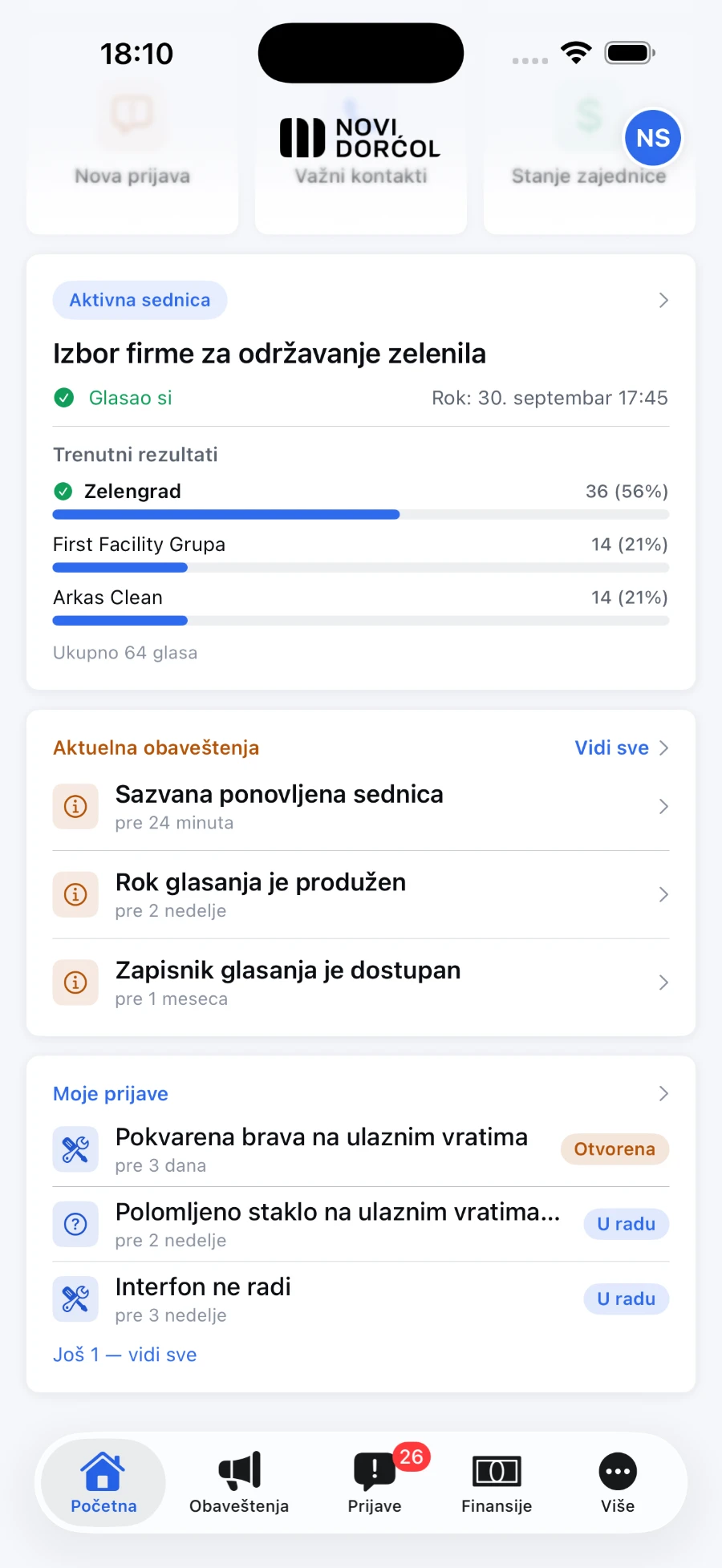
Organized records let the manager establish the number of participants and the result after voting closes, in line with the community’s decision-making rules.
Voting deadline and notifications
The deadline for online voting should give owners enough time to read the proposal and vote. A notice when voting opens and a reminder before it closes help the information reach owners who don’t follow the community’s communication every day.
Keeping decisions and minutes
Once the process ends, the voting result and related documents should be kept in the community’s records. That way you can later establish when a decision was made, what was decided and what the result was, without relying on old messages or the manager’s personal records.