A housing community’s costs aren’t just the obligations that fall due every month. Besides regular maintenance, the building needs to plan funds for major works that happen occasionally but can be very expensive. That’s why it’s important to track funds for routine and capital maintenance clearly.
Funds for routine maintenance
Routine maintenance covers the regular activities needed for the building to run day to day. That can include cleaning common areas, regular servicing, minor repairs and other costs that come up during the year.
Since much of this can be predicted in advance, it forms the basis for planning the community’s regular monthly obligations.
Funds for capital maintenance
Capital maintenance refers to larger works that renew or improve the building’s common parts and systems. That can include work on the roof and facade, major elevator repairs, waterproofing or other significant interventions.
These costs don’t arise every month, so it’s important to plan and build up funds for them over a longer period.
Using funds for their intended purpose
One challenge arises when money set aside for future capital works is used to cover regular costs. That solves one obligation for now, but reduces the funds available when major works become necessary.
Keeping the purpose of funds clearly separate lets the community cover regular maintenance while gradually preparing for future investments.
Overview of income, expenses and available funds
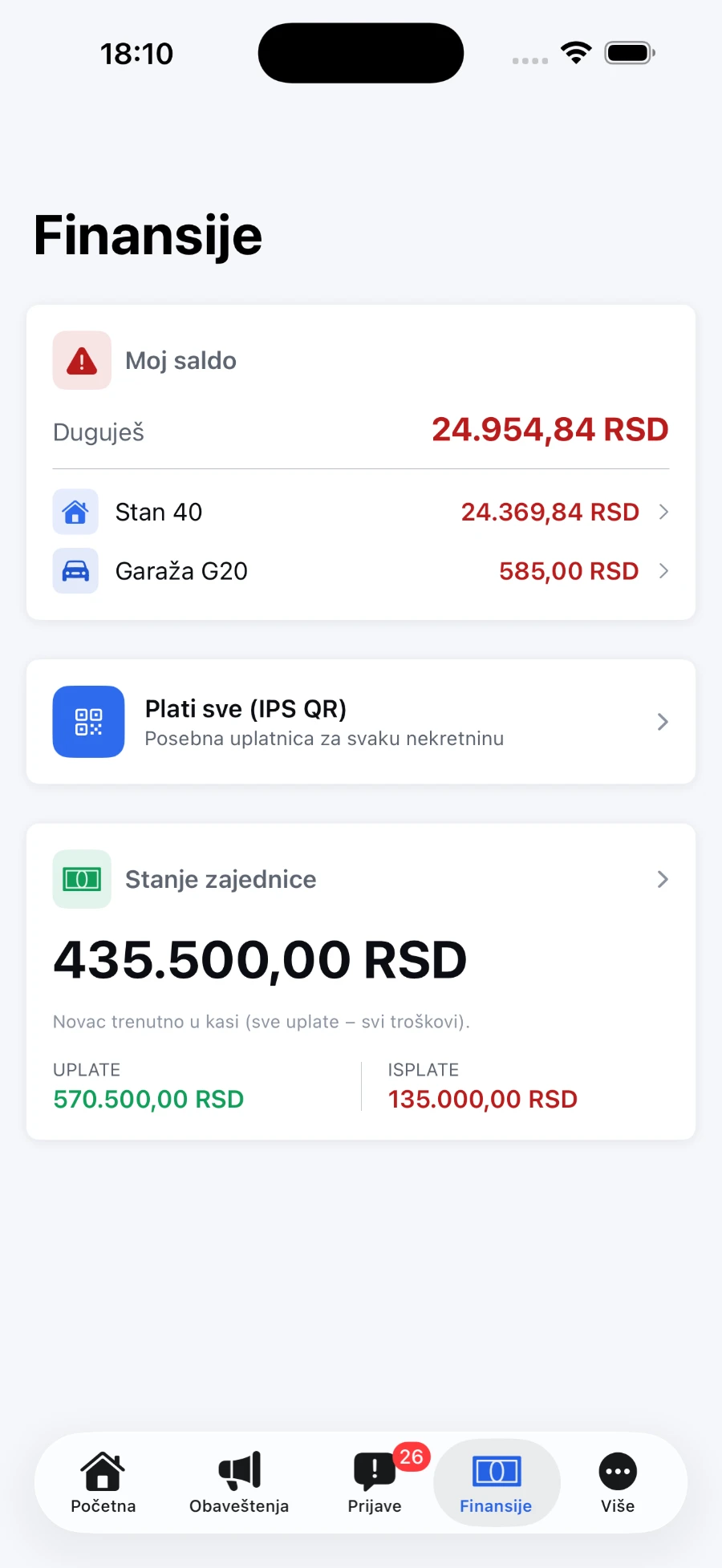
A financial overview should clearly show how much has been collected for a given purpose, how much has been spent and how much is currently available. That way owners can follow the building’s finances and understand how the money they pay is used.
Such records also make it easier for the manager to plan future works and judge whether current contributions are enough for the community’s needs.