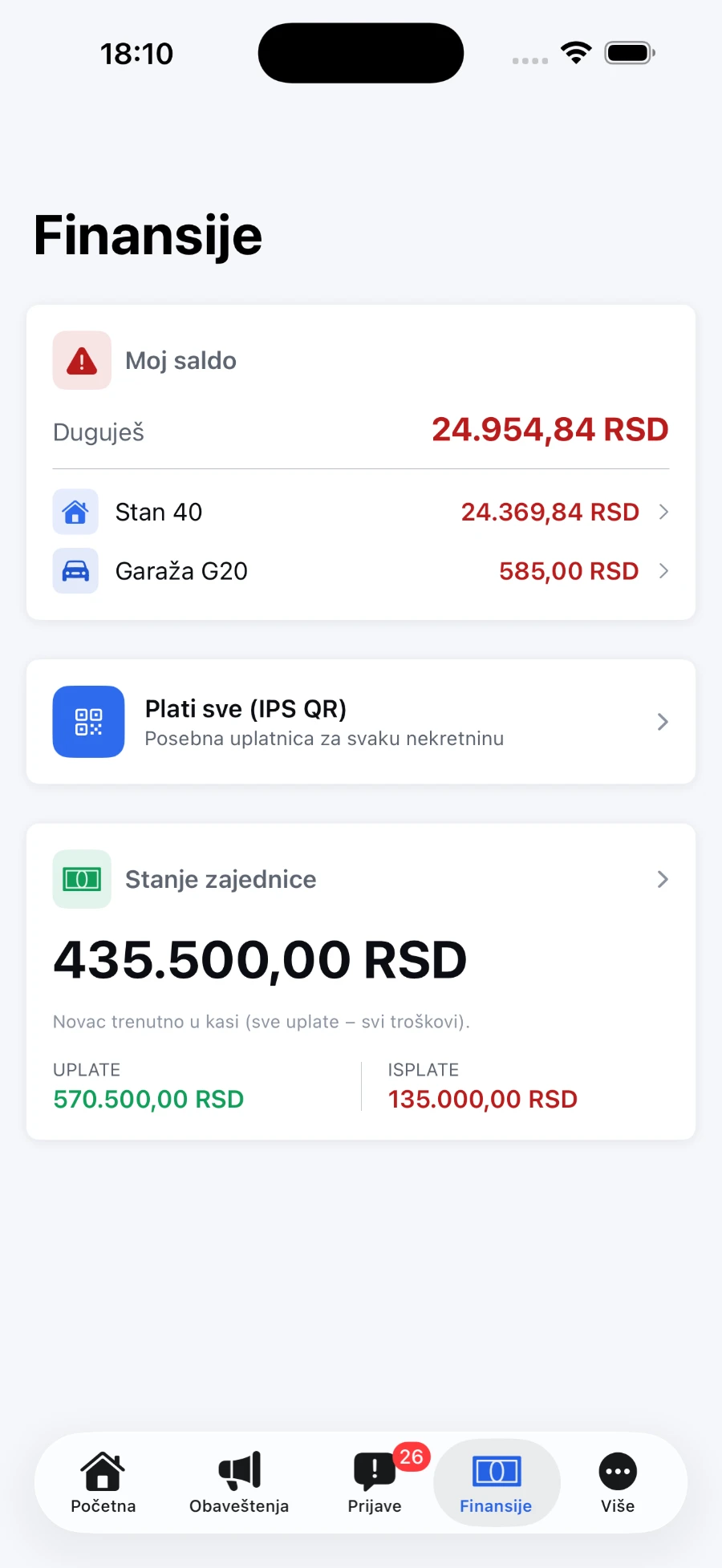
A housing community can include different separate and independent units: apartments, commercial premises, garages, parking spaces and other units. Their owners share the costs of managing and maintaining the building, but the split isn’t necessarily the same for every type of cost.
How costs are split
The calculation depends on the type of cost and the rules for allocating it. For some costs, the number of units is what matters, while for others their floor area is taken into account. That’s why it’s important to state clearly what a given charge covers and on what basis it is allocated.
In some cases, the housing community can also adopt decisions on how owners contribute to certain costs, within the limits allowed by the regulations.
Commercial premises as part of the community
The fact that a shop has a separate entrance, or that its users don’t use certain common areas, doesn’t in itself exempt the owner from contributing to building costs. Commercial premises are part of the building and connected to common elements such as the structure, facade, roof and shared installations.
So the calculation should depend on the type of cost and the status of the specific unit, not just on how much the owner uses it day to day.
Garage-specific costs
Buildings with a shared garage may have costs directly linked to its use and upkeep, such as maintaining the ramp, ventilation, lighting or other garage systems.
Recording these costs separately makes it clear which part of the building an expense relates to and who shares in it.
A clearly defined fee calculation
The basis for calculation and any community decisions that affect the fee should be properly recorded. When the method changes, keep a record of when the new decision takes effect, so it’s possible to check later how a given charge came about.
In eZgrada, different unit types and calculation bases can be recorded separately, so charges are generated according to the rules that apply to that specific housing community.