In a newly built building, the records still have to be set up. Unit data, technical documents, contracts, servicing and decisions gradually form the building’s management history. That’s why it’s important to keep them systematically and in one place from the start.
Records of apartments, commercial units and garages
One of the first steps is creating accurate records of apartments, commercial premises, garages and other units, with the data needed for management and fee calculation. Well-built initial records reduce the need for corrections later.
Move-in and access to information
As people move in, the need for regular communication grows. Residents should have easy access to notices, bills, documents and other building information.
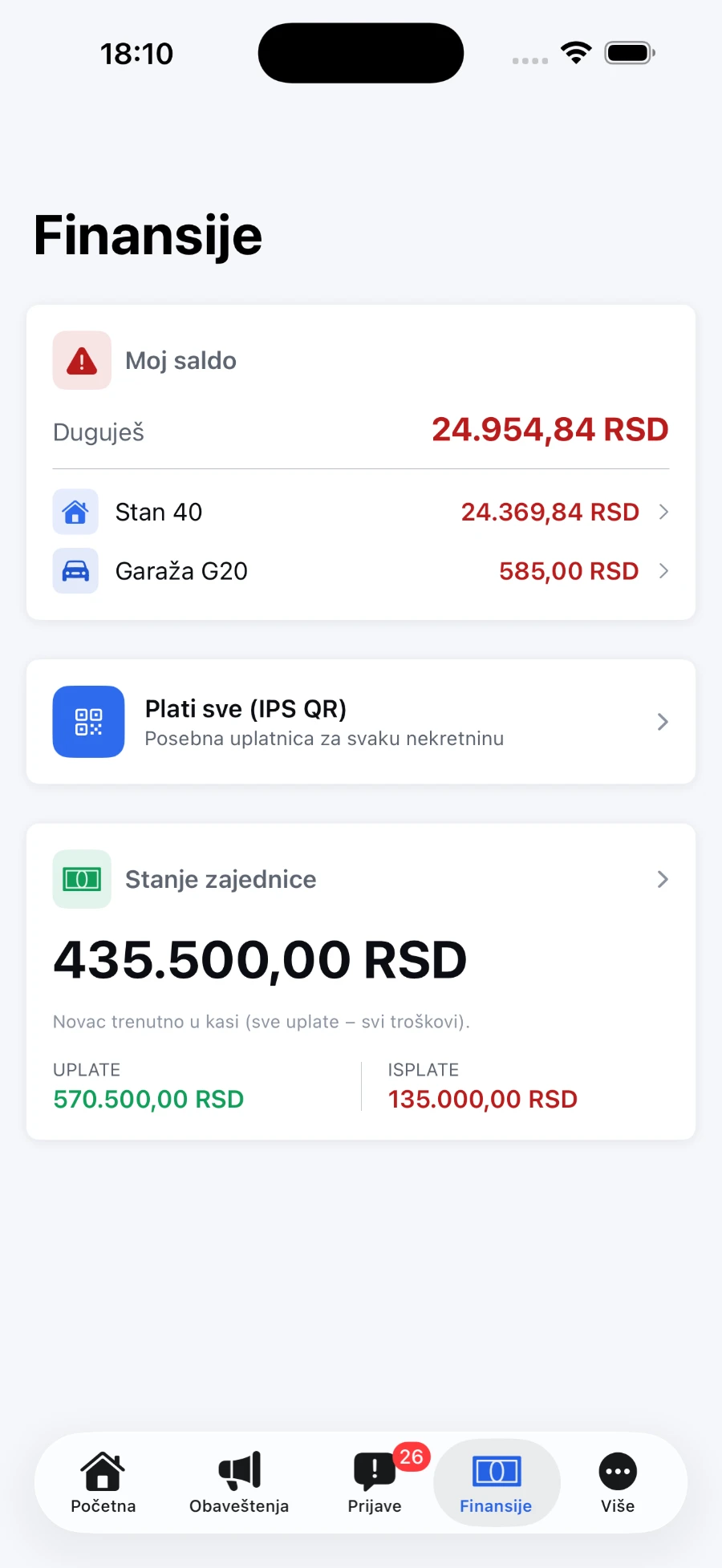
In eZgrada, users get access to their housing community with a code and can follow the relevant information in the app.
Forming the housing community
Once the housing community is formed, management needs to be arranged, the necessary decisions adopted and financing and maintenance set up. Minutes, decisions and other documents should be properly recorded from the very beginning.
Technical documents and maintenance
In a new building, it’s especially important to keep documentation on installed equipment, warranties, contractors and service deadlines. Over time, the records grow with work orders, invoices, reported problems and completed repairs, creating the building’s maintenance history.
The developer’s role and interest
For a developer, the relationship with the buyer doesn’t necessarily end at the handover of keys. Move-in brings buyers’ questions, defect reports, warranty claims and the gradual handover of management to the housing community.
An organized system for communication, documents and problem reports makes this period easier for the developer, the buyers and the future manager, while improving the buyers’ experience after move-in.