Faults and problems in common areas are part of maintaining any building. Good organization means residents can report a problem easily, and also know afterwards whether it was logged and what stage the fix is at.
What a problem report should include
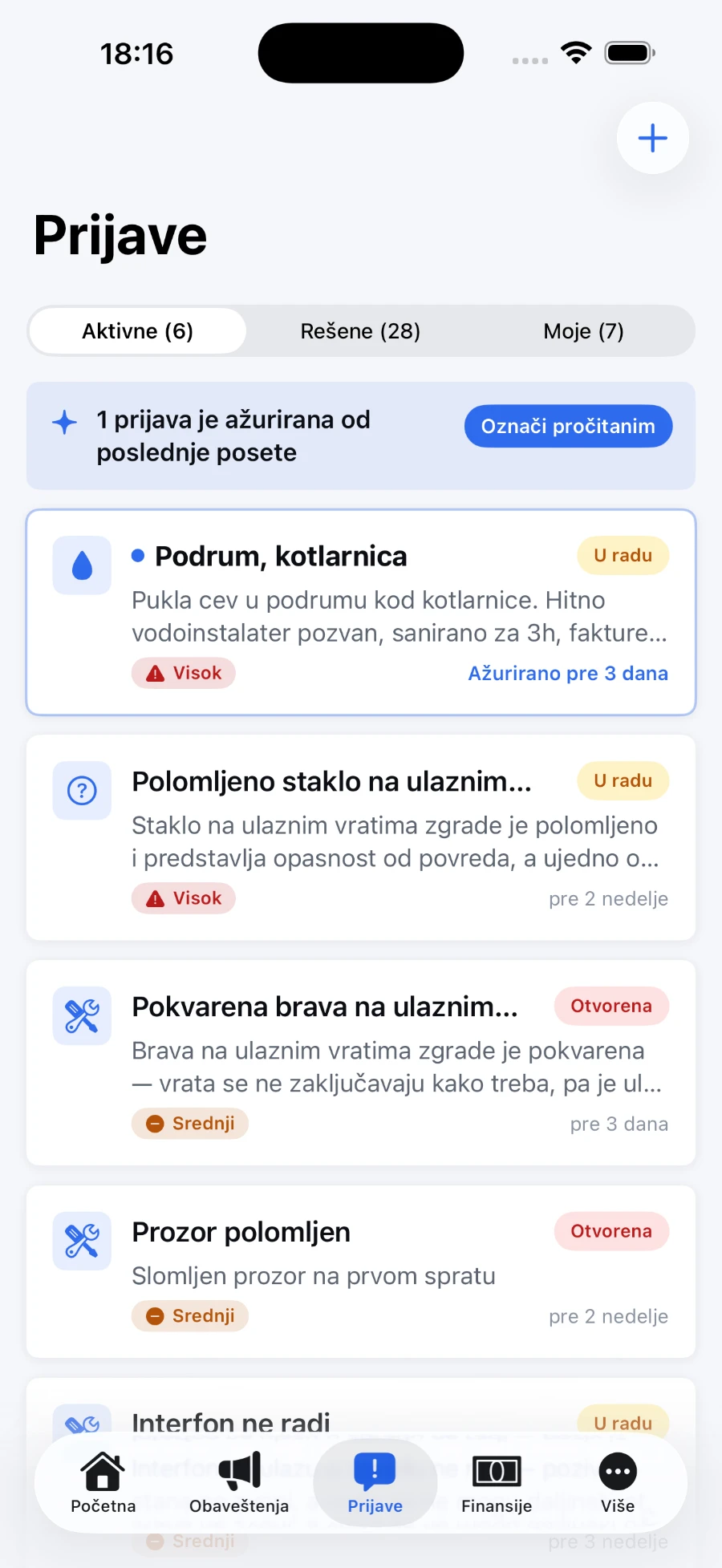
To start, it’s enough to say where the problem is, describe it briefly and, when useful, attach a photo. The more precise the basic information, the easier it is for the manager to assess the problem and pass the report to the right contractor.
A standard report also cuts down on extra messages and calls to work out where the fault is and what exactly it involves.
Tracking the report status
After reporting, it’s important that residents can follow the status: whether the report was logged, whether work is in progress and when the problem was closed. That way the resident and the manager have the same information about where things stand.
This is especially useful when several residents notice the same problem, as there’s no need to open separate conversations about the same fault.
Setting priorities
Not every reported problem is equally urgent. Faults that could endanger people or cause greater damage need a faster response than problems that don’t directly affect how the building works.
Clear priorities help the manager organize repairs according to urgency and consequences.
Records of past faults
Keeping reports builds up a useful maintenance history over time. If the same fault keeps coming back, the manager can see past repairs, the contractors involved and how the problem was handled before.
Such records can also help decide whether to keep making individual repairs or consider a more permanent solution.